
what's actually happening in your head.
You know the feeling: the vise, the ice pick behind one eye, the light that stings. Here's the part no one explains, and how Soothefy is built around it. No hype. Just the mechanism.

A migraine is not a headache. It's a storm.
Researchers describe an attack as a wave of over-excited nerves and irritated vessels around the brain, turning ordinary light, sound and movement into pain. Your nervous system has the volume up on everything.
Blood vessels around the brain dilate and become inflamed. That's the pounding, the "fist inside my head."
The trigeminal nerve, the main pain line of the face and head, lights up and won't settle. Hello, ice pick behind the eye.
Light is violent, sound is a slap, smell is too much. This is real neurology, not you being dramatic.
three things happen the moment it's cold.
Cold narrows what's throbbing
Cold prompts nearby blood vessels to constrict. Scientists note this narrowing looks similar to what triptan migraine medicines do, though it gets there a different way. Less swell, less throb.
Cold slows the pain signal
Cooling activates the same TRPM8 "cold" receptors that menthol taps into, dialling down how fast angry nerves can fire. The signal gets quieter before it reaches you.
Cold crowds out the hurt
A strong cold sensation competes with pain for the same nerve pathways, the "gate control" idea. Your brain can only carry so much at once, so cold gets a word in edgeways.
Most people ice the forehead. The blood matters more.
Cold on the surface has to fight through the skull to reach the vessels inside. But wrap cold around the whole head and the sides of the neck, where big arteries run close to the skin, and you cool the blood on its way to the brain. You reach the source, not just the surface.
average drop in migraine pain when cold was applied to the arteries at the neck.
From a randomized controlled trial of 55 migraine patients (Sprouse-Blum et al., Hawaii Journal of Medicine & Public Health, 2013). In the same study, people using a room-temperature wrap saw their pain rise. Cold therapy is one of the oldest and most-used self-care tools for migraine, and the science is finally catching up to what sufferers always knew.
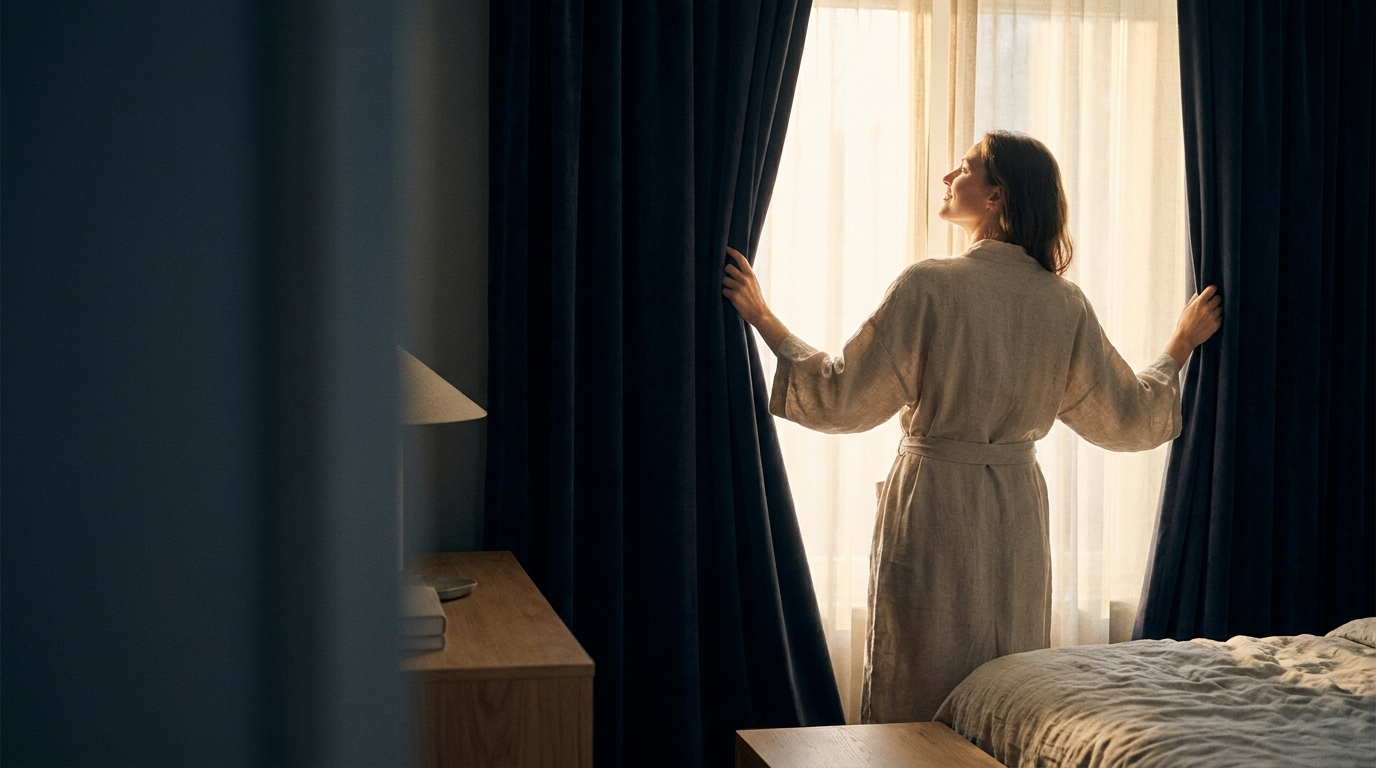
The throbbing goes quiet. The light stops shouting. You get the day back.
cold for the migraine. warm for the tension.
Cold constricts and calms
For the acute attack. Cold narrows swollen vessels, slows the firing nerves, and numbs the throb. This is the migraine, sinus-pressure, eye-strain, hot-flush setting.
Warmth loosens and lets go
For the tight, clenched days. Heat relaxes the knotted muscles of the neck and jaw that feed a tension headache, and eases you into the wind-down. Same cap, warm side.
Cold is only a third of it. Then comes the dark, and the pressure.
Steady, even pressure feels grounding on a head that's pounding, and it keeps the cold pressed exactly where it needs to be. Snug, never a vise.
During an attack, light is genuinely painful, photophobia is a hallmark of migraine. Slide the mask down and the world goes dark. Slide it up when the school run still has to happen.
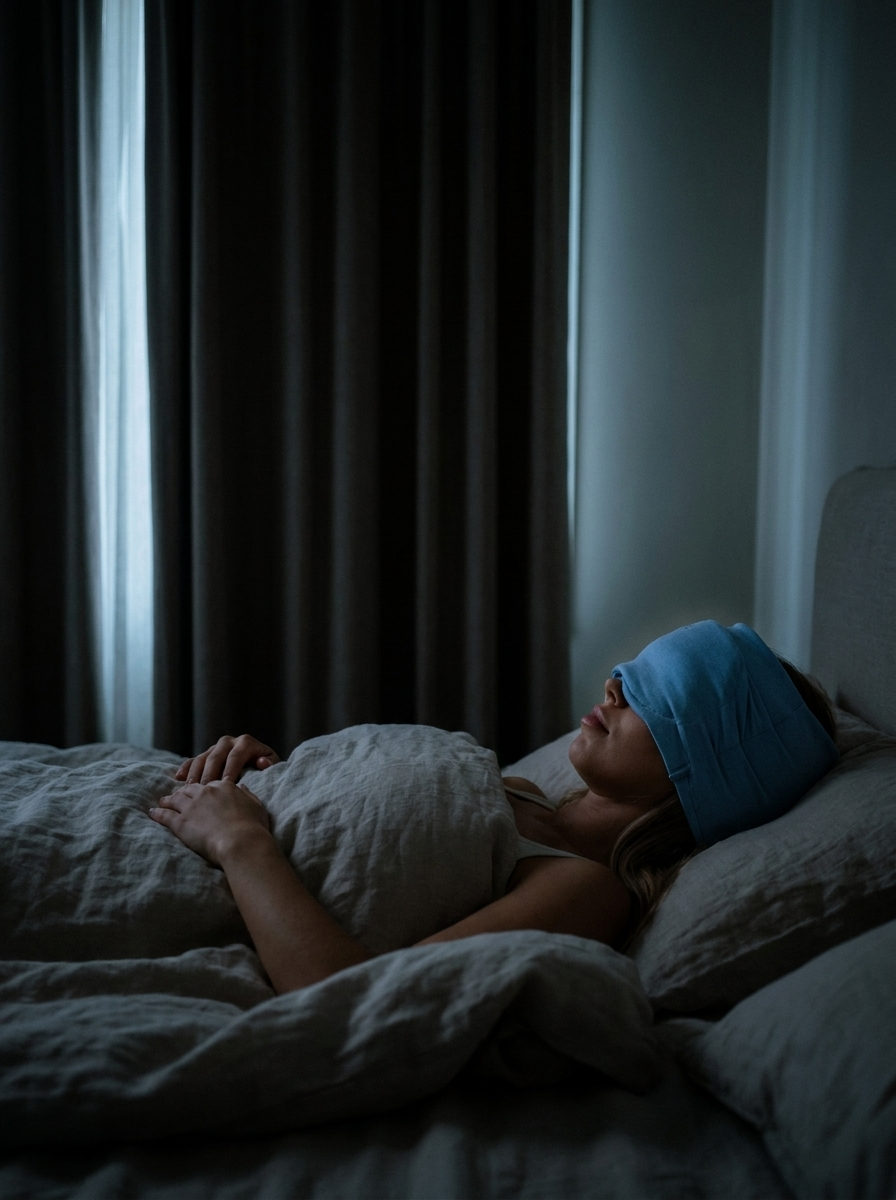
This is not a cure. Nothing that promises one deserves your trust.
It's a drug-free comfort measure, not a replacement for your medication. Keep taking what your doctor prescribed. Soothefy sits alongside it.
Many people wear it in the waiting window, that awful half hour after the triptan before it kicks in, or through the flares meds can't fully touch.
Bodies differ, and so do migraines. That's exactly why you get 60 days to find out on your own worst days, risk-free. If it isn't for you, send it back.
Keep one cold, for the day you hope isn't coming.
Buy 2 get 1 free, so there's always a chilled one waiting in the drawer. 60-day money-back guarantee.